
China’s passenger vehicle market is expected to extend a “slow recovery” through April, the China Passenger Car Association (CPCA) said on Thursday.
In March, both sales and production bounced back from February’s holiday-driven slowdown — which the association previously described as “the year’s absolute trough.”
Wholesale volumes reached 2.378 million units in March, down 1.6% year over year despite the sequential increase of 56.6%, according to data released by the association.
Production also jumped 72.2% month over month.
However, it remained down by 4.9% compared to March 2025.
Dealer inventory rose by 30,000 units — a smaller build-up than in previous years.
The association had warned that February would mark the weakest month of 2026, as the record-long nine-day Chinese New Year holiday left just 16 working days — three fewer than February 2025 — and halted dealership operations and logistics during “the core period of the month.”
Automakers concentrated most of their new model launches in the post-holiday period, a strategic choice CPCA said contributed to a stronger March rebound.
New energy vehicle (NEV) sales — including both retail figures and exports — reached 1.14 million units in March, up slightly by 1.1% year over year.
Battery electric vehicles (BEV) made up 60.8% of the mix, followed by plug-in hybrids (PHEV) at 30.8% and range-extended EVs (EREV) at 8.4%.
April Oulook
According to the CPCA, “production and sales are expected to continue a slow recovery” this month.
April has 21 working days, one fewer than the same month of 2025.
The rebound will be supported by consumption-focused policy measures, the upcoming Beijing Auto Show — scheduled for April 24 to May 3 — and car purchases tied to the May Day holiday travel period.
Despite that, the CPCA has also flagged some headwinds, including rising vehicle ownership costs and weak demand from first-time buyers in the EV segment.
Exports
The standout figure in the March data is the widening gap between a record-breaking export performance and a contracting home market.
Passenger vehicle exports reached 695,000 units in March, up 74.3% year over year and up 25.2% from February.
NEVs now represent 50.2% of all Chinese passenger vehicle shipments overseas, up around 14 percentage points from a year earlier.
The figures indicate that the country is exporting more electrified vehicles than combustion ones for the first time ever.
NEV exports alone hit 349,000 units in March, a 139.9% jump from a year ago.
During the first quarter, a total of 908,000 new energy vehicles were shipped overseas, a 123.7% surge year over year.
PHEV x EREV
Plug-in hybrids and range-extended EVs are driving the export acceleration, reflecting a broader strategic pivot by Chinese automakers away from their earlier focus on fully electric models.
PHEV exports nearly tripled (199.7%) year over year in March, while EREV exports more than quadrupled (345.8%).
The shift reflects a production pivot by brands that had previously committed exclusively to pure EVs.
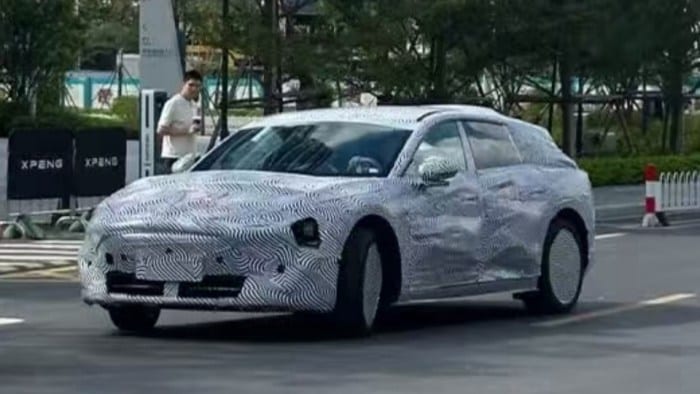
XPeng, which had built its lineup entirely around battery electric vehicles since its founding 11 years ago, plans to launch seven models in 2026 — three of which are extended-range variants of existing BEVs — as part of what the company calls a “dual-powertrain” strategy.
Xiaomi, which produced only the fully electric SU7 and YU7 up until now, is expected to debut its first EREV — a large three-row SUV — later this year.
Both powertrains offer longer total driving ranges than pure EVs and address charging infrastructure gaps that remain a barrier to BEV adoption in many overseas markets.
For plug-in hybrids specifically, there is also a significant tariff advantage in Europe: the European Commission’s countervailing duties on Chinese-made EVs apply to battery electric models but exempt PHEVs.
BYD and Chery, for instance, have used this gap to build sizeable market share across the continent.
Extended-range EVs, by contrast, are classified alongside BEVs under current EU rules and do not receive the same exemption — meaning their export growth reflects product demand rather than tariff arbitrage.
BEV exports also doubled from a year ago, as Chinese EVs increase competition in overseas markets.
Domestic Sales
Domestic retail, meanwhile, tells the opposite story.
Passenger vehicle retail sales fell to 1.648 million units in March, down 15.0% year over year, despite the 59.4% increase from February.
NEV retail dropped to 848,000 units, down 14.4% year over year.
Cumulative retail for the first quarter stood at 4.226 million units, a 17.4% year-over-year decline — what CPCA described as the weakest opening quarter in over a decade, excluding the 2020 pandemic disruption.
The association attributes the domestic weakness primarily to the end of the NEV purchase tax exemption, which expired on December 31, 2025.
Beijing reintroduced a 5% purchase tax on new energy vehicles starting January 1, ending more than a decade of full exemptions from the standard 10% levy.
CPCA described the first quarter of 2026 as a “tax subsidy adjustment period” comparable to those experienced by NEV markets in Europe and the United States.
BYD, Chery
BYD remained the best-selling manufacturer in both retail and wholesale; its figures reflected the broader market weakness, however.
The Shenzhen-based automaker posted March retail sales of 194,000 units, down 33.1% year over year, and wholesales of 296,000 units, down 20.4%.
The Shenzhen-based automaker has now recorded eight consecutive months of year-over-year sales declines, as it leans more heavily on its overseas business.
BYD recently raised its 2026 export target to 1.5 million vehicles last month.
Chery recorded the most striking wholesale-retail split of any major manufacturer.
The Wuhu-based automaker’s wholesales rose 12.6% year over year to 232,000 units in March.
Its retail sales, however, fell 41.0% to 70,000 units — the steepest decline in the top 10.
The divergence is consistent with Chery‘s long-standing position as China’s largest auto exporter — and suggests overseas shipments absorbed the bulk of the wholesale volume while domestic deliveries collapsed.
Chery operates a multi-brand portfolio covering different segments, which includes the Chery brand as its mainstream line, Exeed as its premium marque, Omoda and Jaecoo as its two export-oriented brands, among others.
Changan, Geely
Changan was the only Chinese brand in the retail top 10 with positive year-over-year growth, up 1.3% to 112,000 units.
Geely also held up relatively well, with retail down 12.2% and wholesale essentially flat at 0.4%.
Late last month, Geely‘s founder and President Li Shufu announced that the group will build more vehicles in Europe using existing plants owned by Volvo Cars.
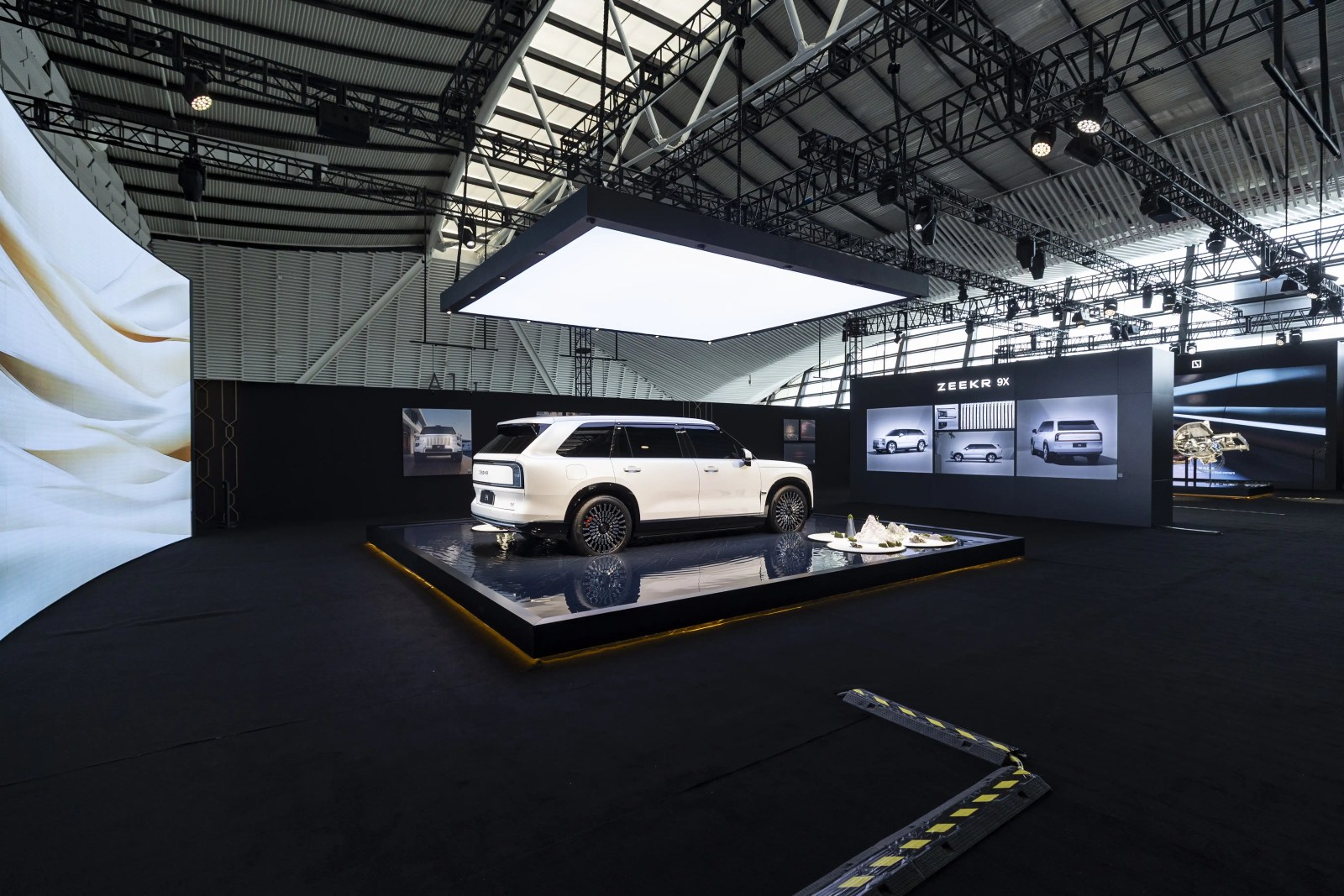
Geely Auto includes the core brand, sitting alongside Geely Galaxy, the premium EV maker Zeekr and the more affordable Lynk & Co.
Parent company Geely Holding Group also controls Volvo Cars, Polestar, Lotus and Smart (jointly with German automaker Mercedes-Benz).
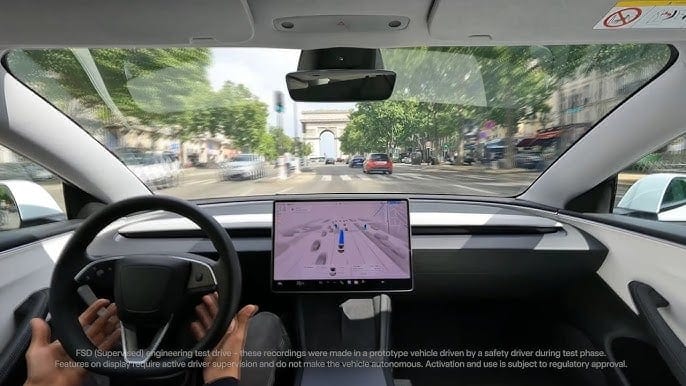
Tesla
Tesla posted a mixed set of figures that align with the broader CPCA narrative of strong exports offsetting weak domestic demand.
The total figures — including retail sales and exports — rose 8.7% to 85,670 units, putting Tesla seventh on the wholesale table.
The GigaShanghai plant shipped 29,563 vehicles to overseas markets in March.
The figures represent a 528.87% year-on-year growth.
Tesla‘s Chinese Gigafactory typically front-loads exports in the first two months of each quarter before shifting production toward the domestic market in the final month.
The pattern tends to inflate wholesale figures early in the quarter and boost domestic retail at the end: retail sales jumped 46.9% from the previous month, despite a year over year decline of 24.3%.
The Tesla Model Y — which includes the five-seat variants and the six-seat Model Y L — accounted for 55,865 of the total vehicles sold last month, a 13.9% growth year over year.