
General Motors has redesigned how Apple CarPlay and Android Auto share the screen with its own software, in a new interface debuting on the 2027 Chevrolet Silverado and 2027 GMC Sierra, three years after it began removing phone projection from its electric vehicles.
The two pickups have always offered CarPlay and Android Auto. GM’s electric models increasingly have not.
The company dropped phone projection from its electric vehicles from 2023, starting with the Chevrolet Blazer EV, and removed it from the Chevrolet Silverado EV Work Truck and the GMC Hummer EV for the 2026 model year.
Chief Executive Mary Barra told The Verge in October last year that the phase-out would continue “across the portfolio” as major launches arrived, citing the clunkiness of switching between phone and native interfaces.
A GM spokesperson subsequently said existing vehicles would keep projection and that combustion models would retain it for the foreseeable future.
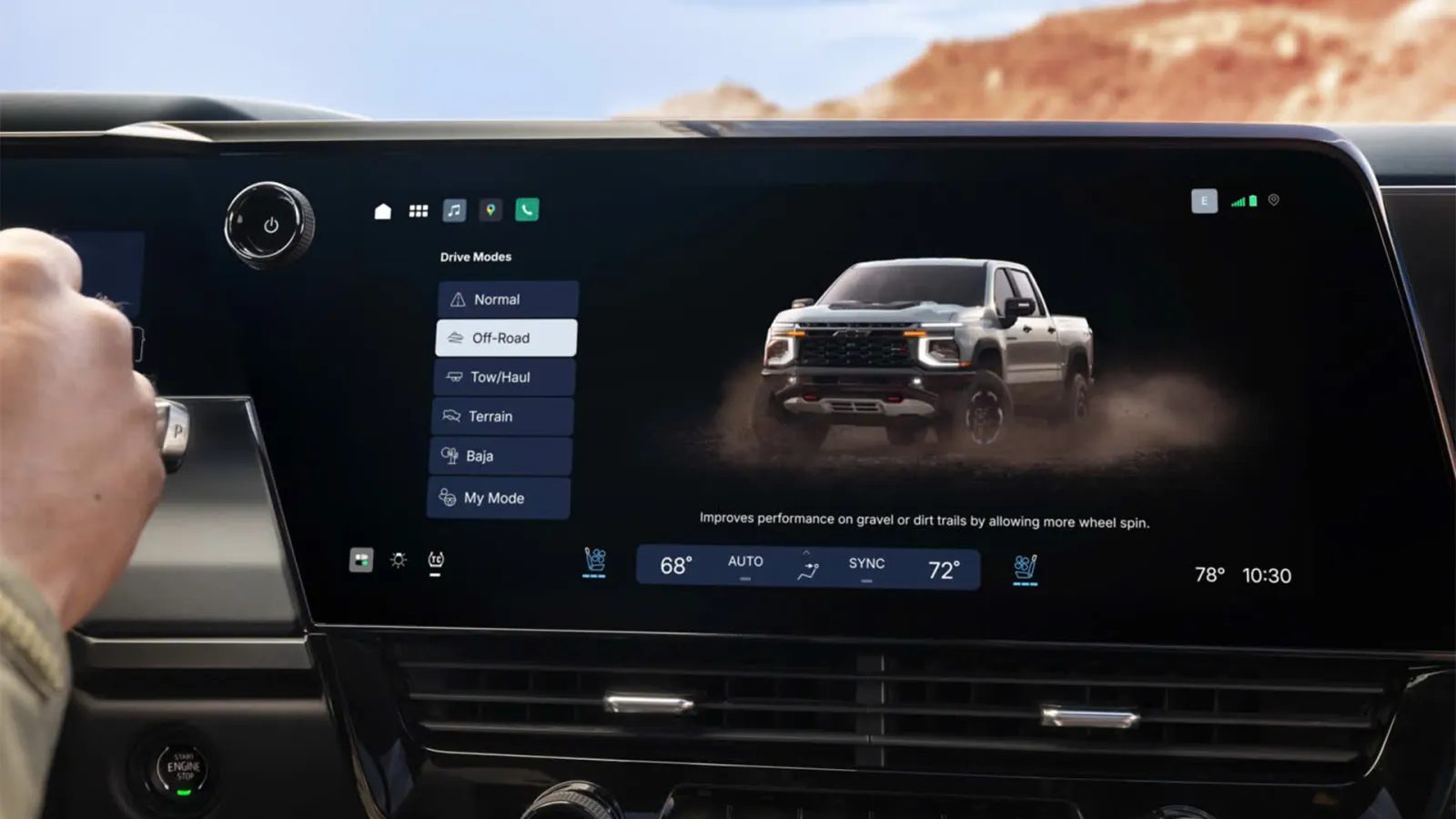
The new user interface places infotainment controls, driver-assistance visuals and third-party phone projection under a unified design language built on what GM described as a single scalable foundation spanning electric, gasoline and diesel-powered vehicles.
Sebastian Bauer, GM’s Executive Director of Human Interface Design and a former Apple and Google executive, led the effort after GM restructured its digital experience operations under its design division rather than its software unit.
“This was all part of a very strategic, very intentional restructuring to ensure that we are best positioned to create the best possible customer experience,” Bauer told CNBC.
That restructuring cost GM three senior technology executives.
GM’s software organisation has turned over heavily in the same period. Dave Richardson, who spent twelve years at Apple, stepped down as senior vice president of software and services engineering on October 31 last year.
Baris Cetinok, hired from Apple, Microsoft and Amazon, left on December 12, a month after describing the job to CNBC as “a product person’s dream”.
Barak Turovsky departed in the same window. GM merged vehicle software engineering into global product under Sterling Anderson, a former Tesla and Aurora executive appointed Chief Product Officer.
Bauer described the design philosophy in terms of cognitive load.
“Our job is to make sure that we reduce cognitive load, and we give people the information that they need to see at the moment when they see it,” he stated.
The system proactively surfaces relevant controls — opening a garage door, answering an incoming call, adjusting trailering settings — without requiring drivers to navigate through menus or secondary screens.
One Software, All Powertrains
GM engineered the system as a platform play.
One codebase serves battery-electric, internal-combustion and diesel trucks, allowing the company to push over-the-air updates and new features across its fleet without maintaining parallel software architectures.
The approach matters for GM’s electrification roadmap at a time when the automaker faces unresolved questions about its EV truck program.
In May, GM denied reports from Crain’s Detroit Business that it had indefinitely suspended production of its next-generation electric trucks, previously planned for around 2028.
A spokesperson told Motor1 at the time that “GM has not canceled any electric trucks,” adding that “EVs remain the endgame for GM.”
Starting the rollout on the Silverado and Sierra — GM’s highest-volume nameplates — means the system will reach a far larger installed base than a launch confined to lower-volume EVs like the electric Silverado, Hummer EV or Escalade IQ would have done.
The interface also arrives two years before the hardware built for it. The 2027 trucks run on the Vehicle Intelligence Platform, which GM consolidated in 2022.
Its centralised computing platform, built around Nvidia Thor processors, does not arrive until 2028 on the Cadillac Escalade IQ. More than 4.5 million GM vehicles could already take over-the-air updates as of October last year, growing by about two million a year.
The company framed the day-one software as a starting point.
“What customers experience on day one is only the beginning,” the company wrote in a press release accompanying the announcement.
Split-Screen CarPlay and Android Auto
The change of position is in how phone projection now works.
Rather than handing over the full display to Apple or Google when a driver activates phone projection, the system renders CarPlay or Android Auto in a large card window alongside GM’s own applications.
Trailering metrics, vehicle status and navigation remain visible while a driver uses a phone-based map or streams music.
Colin McCormick, a GM Product Manager overseeing in-vehicle phone projection, said the split-screen model was a deliberate departure.
“The thought here is that these should coexist and you should get the best of both worlds,” McCormick stated during a demonstration in a 2027 GMC Sierra, according to CNBC. “We’re constantly working with Google and Apple on what else we can bring to make this even better.”
GM has not said whether phone projection will appear on electric vehicles running the new interface. A buyer choosing between a Silverado and a Silverado EV would get CarPlay in one and not the other.
The design targets a documented and persistent pain point.
In February, JD Power’s 2026 US Vehicle Dependability Study found that infotainment remained the most problematic category across the industry at 56.7 problems per 100 vehicles — the worst of nine categories measured.
Four of the five most frequently reported issues related directly to phone integration.
Android Auto and Apple CarPlay connectivity led at 8.9 problems per 100 vehicles for a third consecutive year.
Super Cruise Gets Upgrade
The update delivers the most significant graphical overhaul for Super Cruise, GM’s hands-free driver-assistance system, since its introduction.
A new 3D visualization renders surrounding traffic, lane markings, pedestrians and road objects on the driver cluster display in real time — a capability common in competing systems from Tesla, Rivian and others but absent from Super Cruise until now.
“It’s making sure, especially as you are in a hands-off situation, that you understand that the vehicle sees what is happening around it,” Bauer told CNBC.
GM also streamlined activation controls.
Drivers can now engage adaptive cruise control and Super Cruise with a single button press rather than navigating through multiple inputs.
Super Cruise operates on more than 600,000 miles of mapped roads in the United States and Canada.
Ford’s BlueCruise covers about 130,000 miles, and Lucid’s DreamDrive system approximately 125,000.
GM remains the only automaker to offer hands-free trailering through Super Cruise, a capability the new interface supports with a dedicated cluster visualization and a towing card on the centre screen.
Truck-specific Software
Beyond cabin entertainment and driver assistance, the system adds a layer of digital tooling aimed at pickup owners.
A hitch-view camera assists with trailer alignment without requiring a spotter. Underbody camera views surface terrain obstacles during off-road driving.
Mobile app integration lets drivers run full trailer-light checks — brake lights, turn signals, reverse lights and running lights — from their phone, eliminating the need to walk back and forth between cab and trailer during pre-trip inspections.
The redesigned home screen defaults to a split-view layout with a full interactive map on one side and vehicle data — fuel economy, trailering metrics or media controls — on the other.
Incoming phone calls display as a small notification banner rather than taking over the screen.
A persistent call timer lets drivers maintain access to navigation and other functions while on the line.