Chinese automaker Chery is part of a five-party consortium that will launch a new Japan-focused electric vehicle brand from 2027.
The joint venture — Singapore-registered Electric Mobility Technology, or EMT — was first reported by Nikkei Asia on Sunday.
EMT will develop a new EV brand built on Chery platforms and technology, with the first models scheduled for sale in Japan in 2027 and a four-model lineup targeted by 2029.
Production will begin at Jiangsu Yueda Automobile Group’s plant in China, with Japan-based manufacturing under evaluation for 2030 or later, according to NTV Turkey.
EMT’s shareholders include Chery, Japanese auto-parts retailer Autobacs Seven, Chinese state-owned automaker Jiangsu Yueda Automobile Group, Chinese battery maker Gotion High-Tech, and Japanese spray-equipment manufacturer Anest Iwata.
Caveats From Both Sides
Both companies issued formal clarifications on Sunday.
Autobacs Seven told the Tokyo Stock Exchange that while it has invested in EMT, no concrete decisions have been made on whether it will sell China-made EVs in Japan or use its store network for sales or service.
The Japanese retailer reaffirmed its long-term “Beyond AUTOBACS Vision 2032” strategy, positioning zero-emission vehicles as key growth products on the path to ¥500 billion in consolidated net sales by fiscal 2032.
Chery told Chinese outlet Yicai on Monday that it is only one of several shareholders in the EMT project and does not participate in its operations or management.
The clarifications soften the initial Nikkei framing, which characterised the deal as a Chery-Autobacs partnership.
The structure is closer to a consortium-led product programme with Chery as the technical and product anchor and Autobacs as a strategic investor evaluating retail integration — with neither company formally driving the venture’s operations.
Cracking the 95% Wall
The Japanese automotive market has historically been impervious to foreign brands, with Japanese automakers controlling roughly 95% of domestic vehicle sales.
Tesla and BYD are among the only foreign brands with any measurable presence, and even their volumes remain modest.
Chery’s approach contrasts sharply with BYD’s direct-brand entry in 2023, which has struggled to gain meaningful traction in the Japanese market.
The consortium structure offers several strategic advantages.
The Singapore registration distances the venture from “Made in China” branding concerns that have weighed on BYD’sJapan reception.
Anest Iwata’s involvement provides a Japanese industrial co-signatory.
Yueda Automobile contributes manufacturing capacity in China for the initial production phase.
Gotion High-Tech — in which Volkswagen China holds roughly 26% — supplies the battery technology layer.
Autobacs Seven contributes the most strategically valuable asset for foreign auto brands entering Japan: an established retail and service network across approximately 1,200 stores globally.
The Japanese retailer has previously expanded into selling new vehicles from BYD and Hyundai through its stores, alongside investments in Tokyo-based emerging EV maker ASF and HW Electro.
The Chery Global Playbook
The Japan move extends an aggressive international expansion strategy that has made Chery China’s largest vehicle exporter for 22 consecutive years.
The company sold approximately 2.8 million vehicles globally in 2025, an 8% increase from the prior year, with overseas sales representing nearly half of total volume.
European sales jumped almost sixfold in 2025 to approximately 120,000 units, according to Reuters reporting from April.
Chairman Yin Tongyue has framed Chery’s global strategy as “Double T” — Toyota-level quality and reliability combined with Tesla-level innovation and technology, aimed at appealing to younger global buyers.
Chery’s international brand portfolio includes Omoda and Jaecoo, launched in 2023 with a combined target of 1 million annual global sales by 2027.
The luxury sub-brand Exlantix, launched in 2025, completes the global trio targeting core markets.
Regional Expansion Footprint
Chery’s Japan move is part of a sprawling regional manufacturing strategy.
In Europe, Chery assembles vehicles at a former Nissan plant in Barcelona through its Ebro joint venture with EV Motors SA, and is actively seeking additional production partnerships with European automakers to use existing facilities.
The strategy mirrors Stellantis’s expanded Leapmotor partnership announced on Thursday, which is set to include a Madrid plant transfer and co-developed Opel C-SUV BEV production at Zaragoza.
In the UK, Chery has held exploratory talks with Nissan about using its Sunderland plant and announced plans for a Liverpool R&D facility as its European headquarters in January 2026.
In South Africa, Chery is acquiring Nissan’s Rosslyn plant, with completion expected mid-2026 and local production including EVs and hybrids targeted to begin by end of 2027.
In Turkey, a $1 billion plant under construction in Samsun targets 200,000 vehicles annual capacity and 5,000 jobs.
In Vietnam, Chery’s largest Southeast Asia factory opens in mid-2026 with capacity for up to 200,000 vehicles annually.
Chery is supplying technology and components to JSW Group in India for a new EV brand launch in 2027.
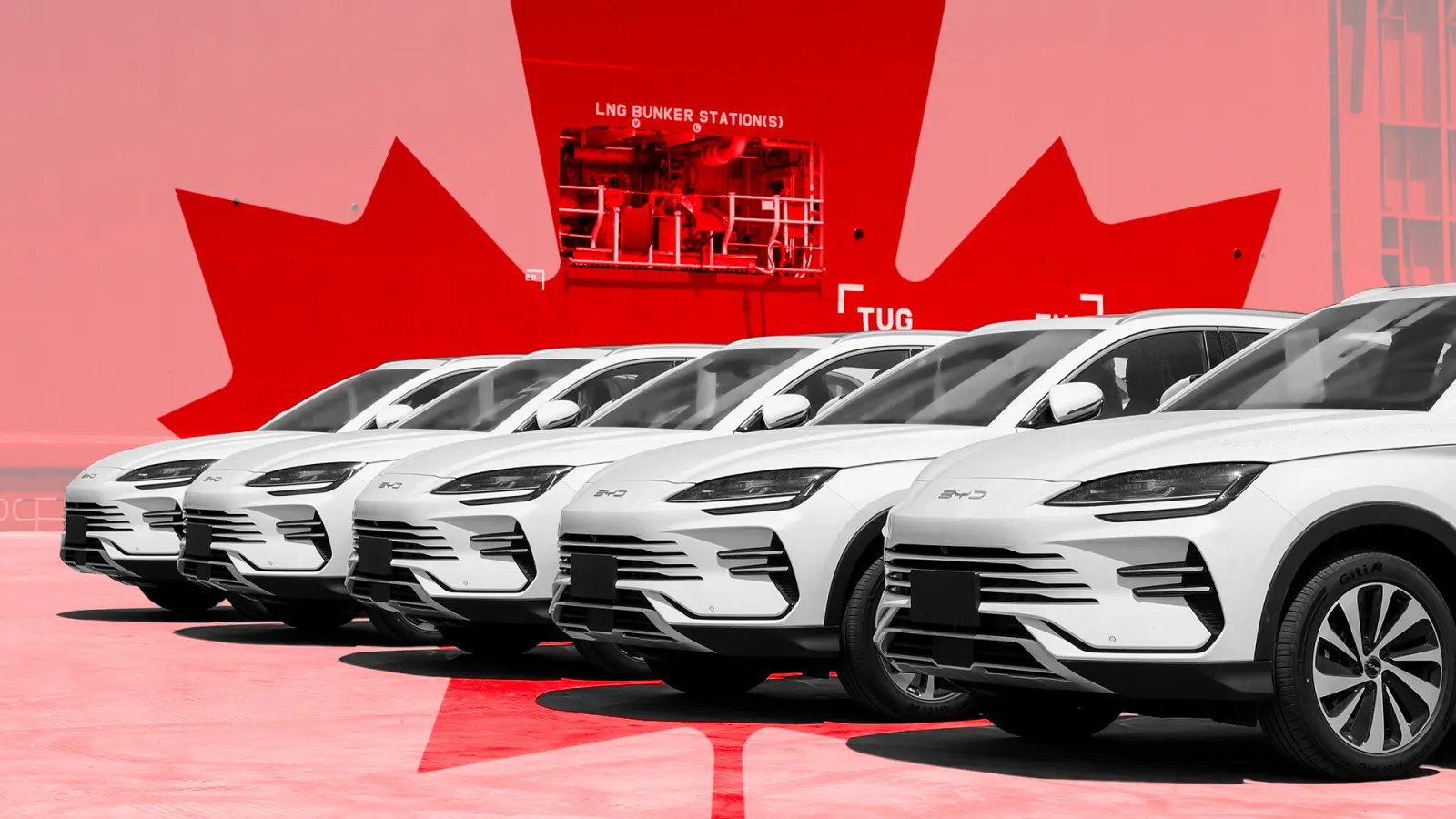
Separately, the company has been the most active Chinese OEM in pre-market preparation under the country’s new 6.1% Chinese EV tariff framework, hiring Canadian staff since January and filing sub-brand trademark applications.
Japan’s EV Market Backdrop
The Japanese market has been one of the slowest major economies to adopt electric vehicles.
In 2024, EVs represented just 2.2% of new car sales in Japan, as consumers have remained strongly loyal to domestic brands and Japanese automakers have historically favoured hybrids over fully electric vehicles.
Japan has set a goal for all new passenger vehicle sales to be electrified by 2035.
BYD has been the most prominent Chinese brand in Japan so far.
The Shenzhen-based automaker entered the market in early 2023 with the Atto 3 SUV and later introduced the Dolphin compact.
BYD’s Japan sales jumped roughly 62% year over year to 3,870 deliveries in 2025.
The company is preparing to launch its Japan-exclusive Racco kei car this summer — its first overseas-exclusive model — alongside five additional vehicles throughout the year.
Tesla has also been expanding its Japanese footprint.
The US automaker plans to double its directly operated service centres in the country to more than 30 this year, while CEO Elon Musk described Japan as receiving a “big investment.”
Japan’s Ministry of Economy, Trade and Industry recently raised the maximum subsidy for fully electric vehicle purchases from ¥400,000 ($2,500) to ¥1.3 million ($8,100) — a move that could accelerate adoption and benefit new entrants such as EMT.