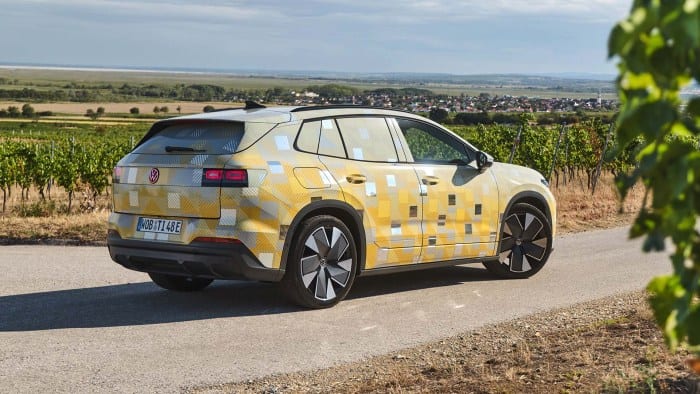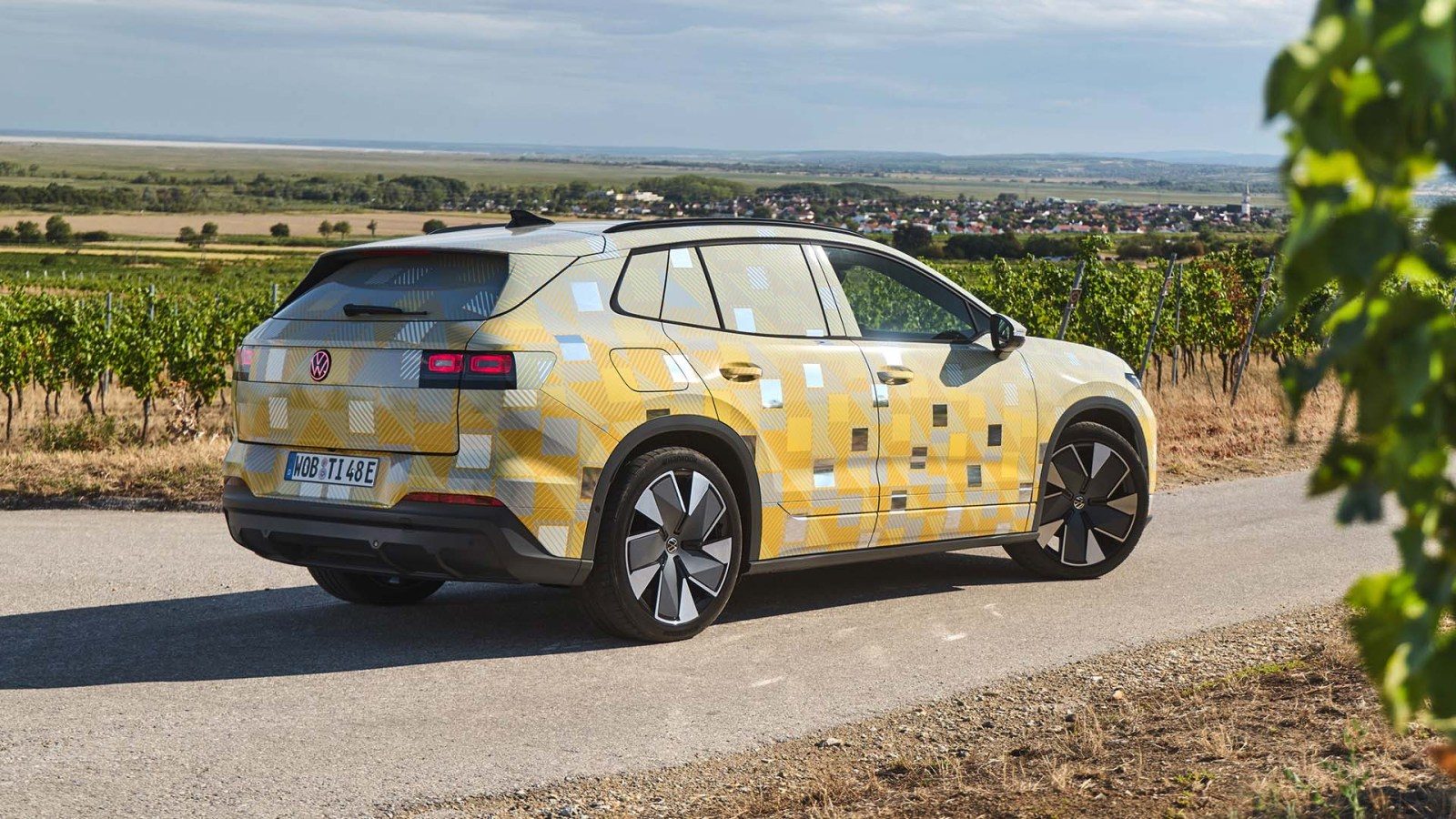

Volkswagen will sell its next compact electric SUV as the ID. Tiguan, moving its best-selling nameplate into the electric range and retiring the ID.4 and ID.5 names.
The ID. Tiguan will premiere in early October and reach markets at the beginning of 2027, the company said on Monday.
It will succeed the ID.4 and ID.5 and be sold alongside the Tiguan with combustion and hybrid powertrains.
The model is the third established Volkswagen name to move into the electric line-up, after the ID. Polo and the ID. Cross.
“More than 8.3 million Tiguan vehicles produced demonstrate the strength and trust associated with this model name,” said Thomas Schäfer, Chief Executive Officer of the Volkswagen brand.
“With the ID. Tiguan, we are carrying this product promise into the electric future,” he said. “Together, both models form a strong offering for our customers’ different powertrain preferences.”
A Name Built on Volume
The Tiguan is currently the best-selling model worldwide for both the Volkswagen brand and Volkswagen Group, the company said.
Deliveries of the Tiguan and its sister model, the Tayron, exceeded one million units last year.
Volkswagen has delivered more than 950,000 ID.4 and ID.5 vehicles since 2021, it said.
The ID.4 and ID.5 were the group’s best-selling electric models in 2025, with 163,400 deliveries, according to its full-year figures.
Their deliveries fell to 53,700 in the first half of 2026, from 84,900 a year earlier. The ID.5, the coupé-styled version, will get no successor.
First Drive
Volkswagen has not released specifications, which are expected at the premiere.
German outlet Edison, which drove a camouflaged prototype, reported three versions at launch on the updated MEB+ platform.
The entry model pairs a 140 kW (190 PS) rear motor with a 58 kWh lithium iron phosphate battery and is projected to reach up to 450 km on the WLTP cycle, according to Edison.
A 210 kW (286 PS) rear-wheel-drive version with a 77 kWh nickel-manganese-cobalt battery is projected at up to 600 km.
An all-wheel-drive 4MOTION version with 220 kW (299 PS) is projected at up to 560 km.
Peak DC charging is 105 kW for the smaller battery and 165 kW for the larger one, with a 10% to 80% charge taking about 26 and 29 minutes, Edison reported.
The SUV is 4,618 mm long on a 2,765 mm wheelbase, with 534 to 1,577 litres of boot space and a front trunk.
Towing capacity is 1.8 tonnes for the base version and 2.0 tonnes for the larger-battery models.
Inside, Volkswagen brings back physical steering-wheel buttons, a fixed climate-control strip, a rotary volume knob and separate switches for all four windows, according to Edison.
An optional 12-inch passenger display makes its debut in a European Volkswagen.
Built in Emden
The ID. Tiguan will be built at Volkswagen’s Emden plant, where it replaces the ID.4.
Emden also builds the ID.7, for which Volkswagen has scheduled at least two extra shifts as electric demand rises in Germany, according to the public broadcaster NDR.
The plant is one of four German sites for which Volkswagen cannot guarantee follow-on production under its restructuring plan, as the group backs 50,000 more job cuts.
North America Later
The ID. Tiguan is also bound for the US, where Volkswagen ended ID.4 production in Chattanooga, Tennessee, in April.
“The ID. Tiguan is planned to succeed the ID.4 in the North American market,” a Volkswagen representative told InsideEVs.
“Following its European launch in early 2027, Volkswagen will share North American timing and additional market-specific details in due course,” the representative said.
Volkswagen is offering $12,500 in customer cash on remaining 2025 ID.4s in the US until November 2.
US ID.4 sales fell 77.2% to 2,205 in the first half, after the federal $7,500 EV tax credit expired at the end of September 2025.
Brand EV Sales Slide
The rename comes as Volkswagen brand electric deliveries shrink. Volkswagen Passenger Cars delivered 138,300 battery-electric vehicles in the first half of 2026, down 28.2%, according to the group’s first-half release.
The group’s best-selling electric model in the period was the Škoda Elroq, with 59,900 deliveries.
Škoda’s battery-electric deliveries rose 48.3% to 108,200.
Group electric deliveries fell 5.8% to 438,500, as growth of 8.4% in Europe was offset by drops of 68.8% in the US and 47.9% in China.
Volkswagen is now selling more fully electric cars than combustion models in Germany, measured by order intake, sales board member Martin Sander told Automobilwoche.
Cheaper Models First
The ID. Tiguan follows the ID. Polo, which starts at €24,995 ($28,400) in Germany and is built in Martorell, Spain.
Series production of the ID. Cross began at Volkswagen’s Navarra plant in Spain last week, with prices from €27,995 ($31,800).
The two share the MEB+ platform with the Škoda Epiq and Cupra Raval.
The group had more than 70,000 orders for the family by July 24, including about 25,000 for the ID. Polo. Orders have since passed 100,000, including more than 40,000 for the ID. Polo.
Volkswagen Group reports third-quarter deliveries in October.