
Rivian may need to raise additional capital as soon as 2027 if it fails to meet technical milestones required to unlock funding from Volkswagen Group and secure a federal loan, according to RBC Capital Markets.
The electric vehicle maker’s liquidity cushion is thinner than it appears, analyst Tom Narayan wrote in a new research note first obtained by PriceTarget.
While Rivian has $7.1 billion in cash and short-term investments, the company is counting on $2.5 billion in additional funding from its joint venture with Volkswagen—$1 billion of which depends on completing specific technological benchmarks, including winter testing of prototypes using a new electrical and electronic architecture.
“Liquidity concerns remain,” wrote Narayan, who maintained a sector perform rating and $14 price target on the stock, implying a 22% downside from Tuesday’s close of $18.02.
As of press time, Rivian shares are falling 5.9% at $16.96.
Multiple Funding Dependencies
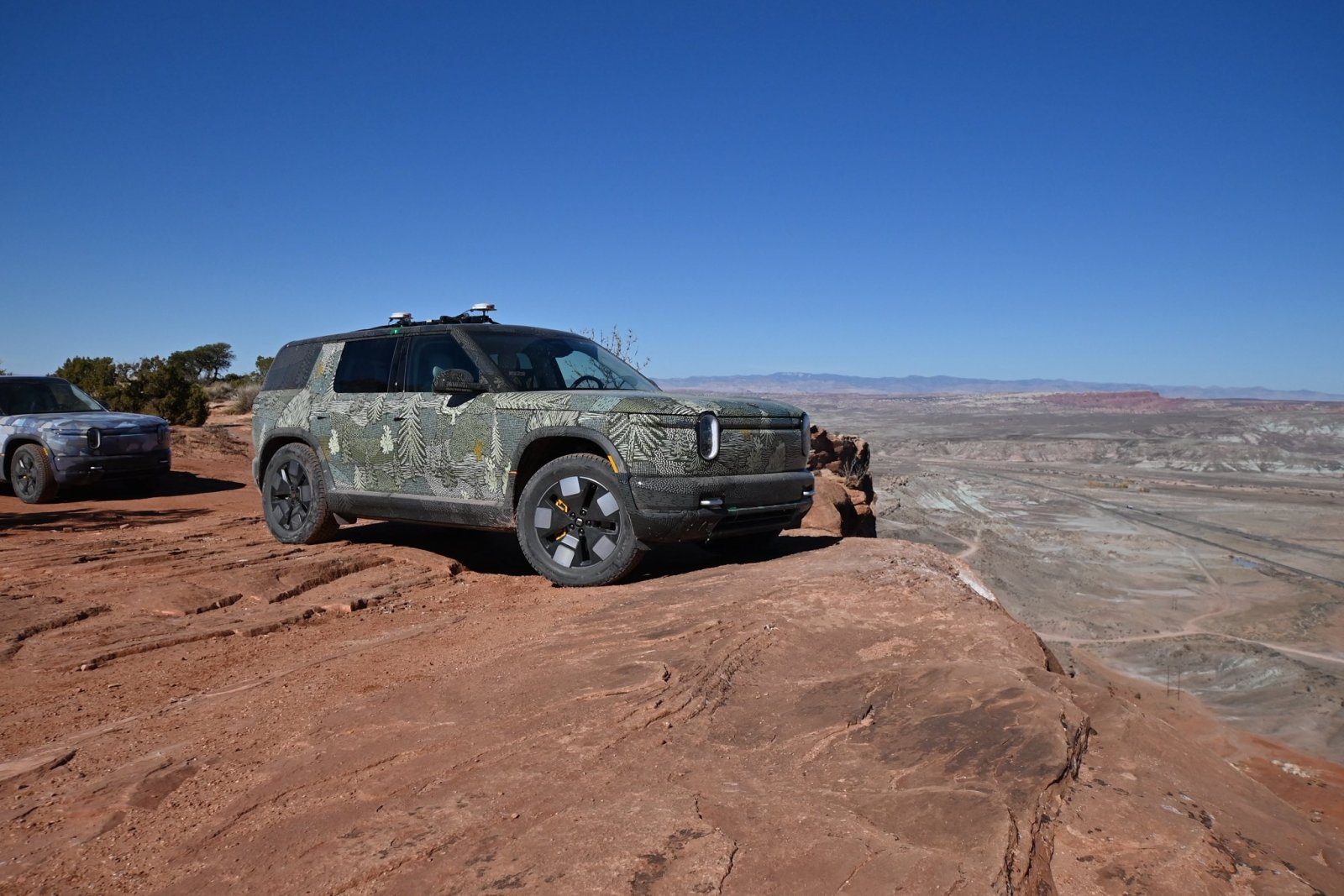
The warning highlights Rivian‘s precarious financial position as it races to achieve profitability while preparing to launch its mid-size SUV named R2.
The Irvine, California-based company faces cumulative negative free cash flow of $10.7 billion from the second half of 2025 through 2030, according to Visible Alpha consensus estimates cited by RBC.
Rivian management has expressed confidence in securing a $6.6 billion conditional loan from the US Department of Energy to help fund construction of its Georgia manufacturing facility.
But if the company encounters obstacles to receiving DOE reimbursement and fails to hit the VW technological milestones in 2026, it may need to tap capital markets within two years, Narayan said.
The company also faces looming debt maturities: $1.5 billion in 2029, $1.725 billion in 2030, and $1.25 billion in 2031.
Generating sufficient cash to service that debt while funding operations will require significant improvement in gross profit margins, the analyst noted.
Narrowing Losses, But Still Burning Cash
Rivian reported a third-quarter operating loss of $983 million, an improvement from the $1.17 billion loss a year earlier.
Net loss totaled $1.17 billion, compared with $1.1 billion in the prior-year period.
The company highlighted progress on cost reduction last week, saying it achieved nearly $19,000 in lower automotive cost of revenues per vehicle delivered year-over-year.
Still, Rivian remains far from reaching profitability.
“Investor focus will remain on gross profit improvements,” Narayan wrote.
RBC’s caution contrasts with a more optimistic view from D.A. Davidson, which raised its price target on Rivian to $15 from $13 earlier this week while maintaining a neutral rating.
That target implied an 8.6% decline from the previous close price.