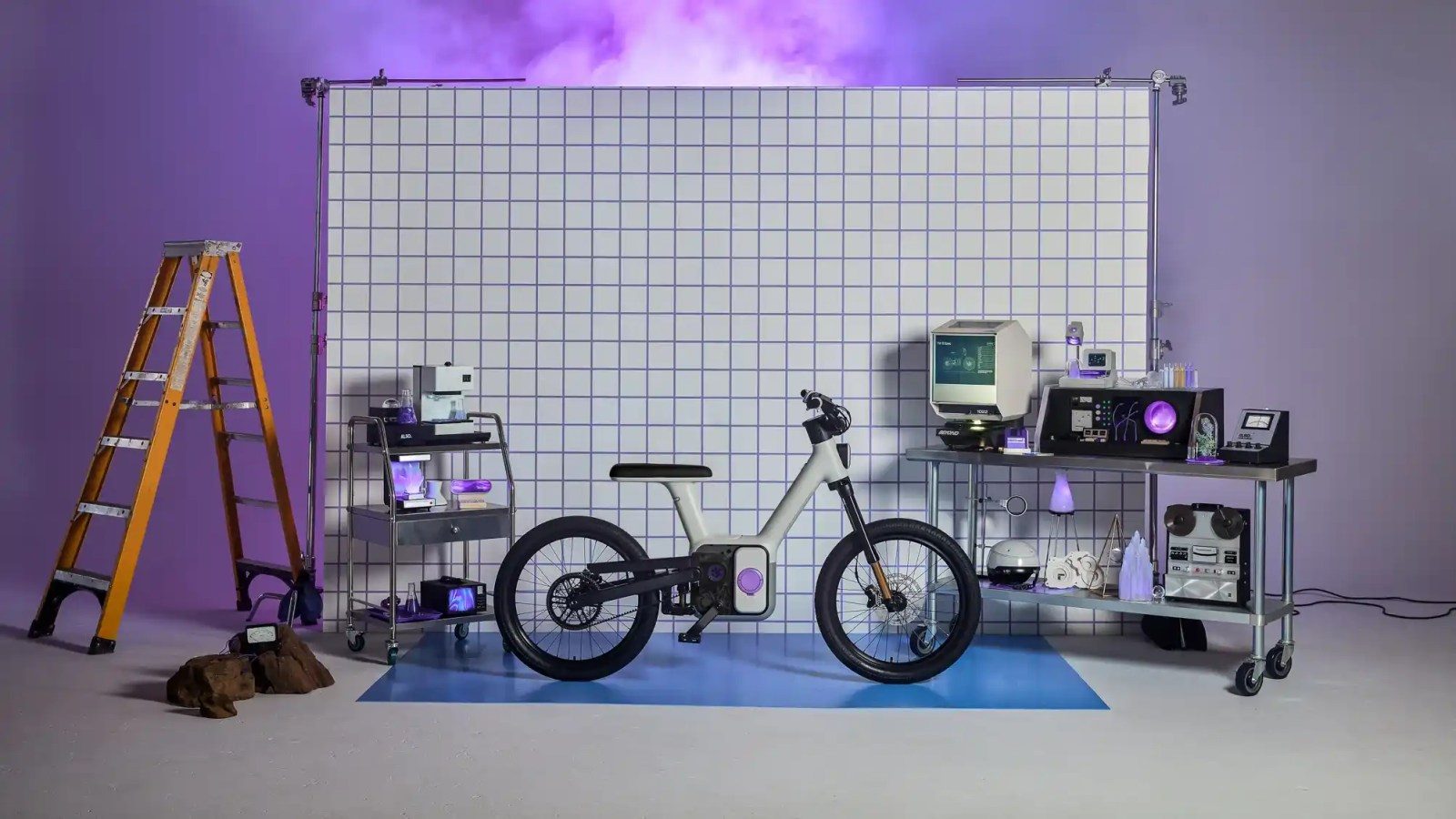

Also Inc. has begun a formal survey of potential customers in Europe, asking how they travel, which car trips they would give up, and whether an employer bicycle-lease scheme would change a purchase.
The email, sent on Friday, is the first operational sign that the Rivian spin-out is designing a European product rather than simply promising one.
The message tells recipients that Also is “building our e-bike for the way people actually move around Europe. Not how planners think they should move. How they do.”
The form says answers will be used “to understand mobility habits and preferences across our EU markets.”
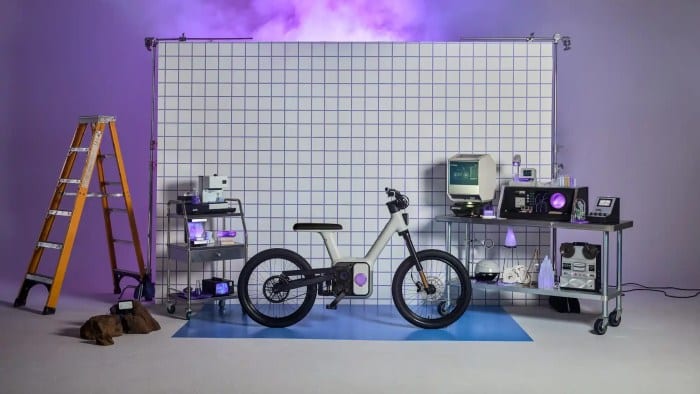
When Rivian separated the micromobility team in March 2025, Also said the United States and Europe would be first markets. Consumer reality has been American. The TM-B e-bike was shown on October 22, 2025.
Spring 2026 deliveries became summer, then September, then waves of Launch Edition shipments that Also now stretches into early November. A $150 million Series D closed in August.
The Form
The questionnaire records country, settlement type, age and whether children live at home. It then asks for a primary mode of travel using European legal labels, not US e-bike classes: car, ordinary bicycle, public transport, standard e-bike (Pedelec/EPAC), speed pedelec, walking, or a mix.
Those two categories are the product fork. An EPAC may assist only to 25 km/h and is treated, in most member states, like a bicycle. A speed pedelec may assist to 45 km/h and often brings insurance, helmet rules and exclusion from cycle tracks.
The U.S. TM-B is a Class 3 machine: pedal assist to 28 mph (45 km/h) and a throttle Also has described as reaching 20 mph. Sold unchanged, that specification would land in the speed-pedelec box and lose the path network that makes short European trips work.
The survey tests whether Also’s targets already ride inside that 25 km/h rule, already accepted a faster bike’s extra paperwork, or still drive.
Later questions map substitution. Also asks cycling frequency, purpose and typical distance, then how many cars the household can use and which journeys — commute, groceries, school run, social trips, exercise — could “realistically” move onto a bike. An open field asks for the main barrier to riding more.
In Northern Europe those barriers are usually weather, cargo, children, theft and winter storage, not range. Also’s TM-B already has swappable top frames, including a utility layout and a passenger kit.
Distribution questions are as important as the vehicle questions. Also asks where a person would research or buy such a bike, and whether they already use or would consider an employer lease such as Germany’s JobRad or the Dutch Fietsplan.
In those markets a large share of premium e-bikes are not paid for in cash. They are leased through payroll. A U.S. list price of $3,500 for the Standard TM-B and $4,500 for Performance and Launch Edition, converted and taxed, will look steep next to a leased mid-market Bosch bike unless Also is on those platforms.
A final block tests motives — technology, emissions, traffic, design, running cost — then asks the respondent to name a product they call premium and to say in one sentence why an Also bike would or would not fit their life.
Two European tracks, not one
In October 2025 Also and Amazon announced a multi-year plan for customized TM-Q pedal-assist cargo quads — four-wheel machines meant for bike lanes, with a payload Also has put above 400 pounds — for delivery fleets in Europe and the United States.
Amazon already runs more than 70 micromobility hubs on both sides of the Atlantic. That deal sits on Rivian’s older van relationship with Amazon.
A separate March 2026 pact with DoorDash covers autonomous last-mile vehicles.
DoorDash also joined Also’s $200 million Series C that month. The August Series D, $150 million led by Prysm Capital with Eclipse, Greenoaks and MVP Ventures, was framed as funding “driven and autonomous” small vehicles and “multiple autonomous form factors for both goods and passengers.”
President Chris Yu said congestion and cost per trip do not change whether a vehicle is driven or not. Prysm’s Jay Park compared the bet to the firm’s early Rivian investment, applied to smaller form factors.
Repeated Delays
Also began inside Rivian in 2022 as Project Inder. It left in March 2025 with $105 million from Eclipse. Greenoaks put in $200 million in July 2025 at a $1 billion valuation, before the bike was public.
The March 2026 Series C added another $200 million. The August Series D takes disclosed cash to about $655 million. Rivian remains a minority owner and RJ Scaringe chairs the board.
That money arrived while the first product was late. An April note to reservation holders still pointed to first Launch Edition bikes at the end of June. A June statement on Also’s site blamed “a rapid, industry-wide spike in demand for raw materials and electronic components” and said teams were working “without cutting a single corner on safety or quality.” On July 31 Also told TechCrunch that Launch Edition units had left the manufacturer for a U.S. warehouse and that those orders would be fulfilled by September.
The same day, posters on r/ALSOmicromobility called the timeline “miscommunication” and “lies.” Some people cancelled. Reservations had been a $50 refundable hold; later buyers paid in full.
Also added a free Alpha Wave helmet for Launch Edition customers as a make-good. Gear Shop ordering slipped a week to Aug. 18. By early September the company was talking about waves through early November for Launch Edition bikes and later windows for Performance and Standard.
Also now says Launch Edition bikes are shipping in the United States.
TM-B
The TM-B is a software-defined Class 3 e-bike with Also’s DreamRide pedal-by-wire system, no conventional derailleur stack, a removable battery Also has tied to vehicle-grade cells, USB-C charging, a small handlebar display, integrated lighting and a modular frame that swaps among solo, utility and bench layouts in seconds.
Jony Ive’s LoveFrom studio worked on an early design phase that ended in 2024. Performance and Launch Edition are listed at $4,500, with up to 100 miles of claimed range and a 10-times assist multiplier.
The Standard is listed at $3,500 and about 60 miles; an earlier shop listing of $3,250 did not survive as the public price. Those figures are U.S. dollars, pre-VAT, for a 28 mph bike. They are not a European offer.
Also has not named first EU countries, a euro price, an importer, a dealer plan or a homologation date.
It has also not said whether the European consumer bike will be an EPAC-only SKU or a dual 25/45 km/h pair.