
Ning Qu, the engineer who led the team behind Nio‘s SkyOS vehicle operating system and oversaw its rollout across the Nio Inc. lineup, has quietly departed the Chinese EV maker to join an autonomous-driving software company.
Qu joined Applied Intuition in February as Head of Vehicle System, based at the company’s Sunnyvale, California, headquarters, according to his LinkedIn profile.
The move ends a four-year tenure at Nio during which he rose from senior director of software solutions and architecture to VP of engineering and global head of the software platform.
The company founded and led by William Li has not publicly announced his departure.
Qu remains listed under his Nio title in the speaker materials for the Financial Times Future of the Car Summit, where he is scheduled to appear later next month in London.
The SkyOS Foundation
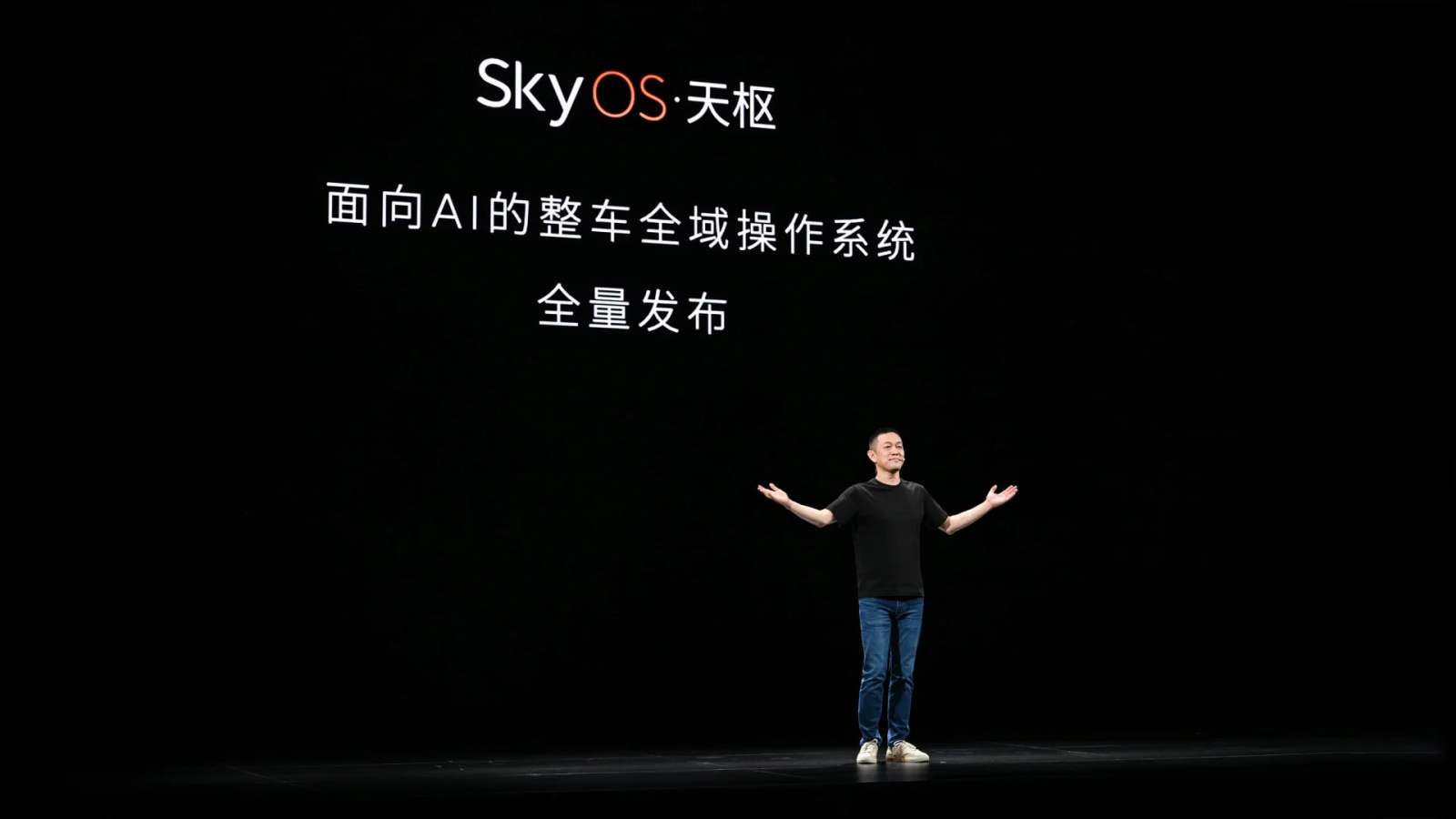
Qu was promoted to VP in January 2024, with global responsibility for the SkyOS vehicle operating system — described by Nio as the foundation of its software-defined vehicle strategy.
In his LinkedIn description of the role, Qu wrote that he was “super proud of leading the talented team on such an ambitious and strategic project SkyOS — NIOs next-generation full vehicle OS as the foundation of SDV (Software Defined Vehicle).”
The platform encompasses “multiple OS variants and dozens of middleware components, including in-house SOA framework,” with team responsibility extending across “all major ECU domains, ranging from motion control and body control to digital cockpit and AD/ADASs,” according to Qu’s profile.
SkyOS reached mass production in September 2024 on the Onvo L60 — Nio Inc.‘s first sub-brand model — and has since been deployed across three additional vehicle programs.
Over 120,000 vehicles had been delivered with SkyOS within the platform’s first 15 months, per Qu’s account.
The FT Interview
In a written interview for the Financial Times Future of the Car Summit speaker materials, Qu detailed his views on the trajectory of the global automotive industry through 2030, describing what he called “the rise of the SDV + AI car.”
Qu was disclosed by FT as one of the speakers of May’s event.
“By 2030, the biggest force will be the rise of the SDV + AI car: vehicles that aren’t just ‘updated,’ but continuously learning systems,” Qu told the Financial Times.
He described a model in which improvement cycles compress to “weeks, not model years,” with the car functioning as “a connected compute platform” tied into a continuous loop of telemetry, model updates, fleet validation, and rollout.
“The disruptive force isn’t a single feature like autonomy or a chatbot,” Qu said. “It’s a new operating model: AI-native software delivery at fleet scale.”
On long-term competitiveness, Qu argued that automakers would be separated by their ability to operate scalable vehicle software platforms without losing safety, quality, or cost control.
He cited platform leverage through a unified vehicle OS, fleet-scale iteration velocity using staged deployments and rollback, and built-in trust through engineered security and compliance evidence as the three decisive factors.
On where value accrues in software-defined vehicles, Qu said hardware margin would compress as platforms converge while a strong vehicle OS creates leverage.
Lifecycle monetization through feature unlocks, subscriptions, and OTA-delivered improvements, in his view, becomes the largest emerging value pool.
“Value is ultimately captured through customer experience: the OS turns hardware + AI into always-improving intelligence — smarter, more personalized, and more capable over time, not just ‘updated,'” he told the Financial Times.
A Software Leadership Gap
The departure leaves Nio without its most public software platform leader at a moment when the company is positioning SkyOS as a competitive differentiator in the increasingly crowded software-defined-vehicle category.
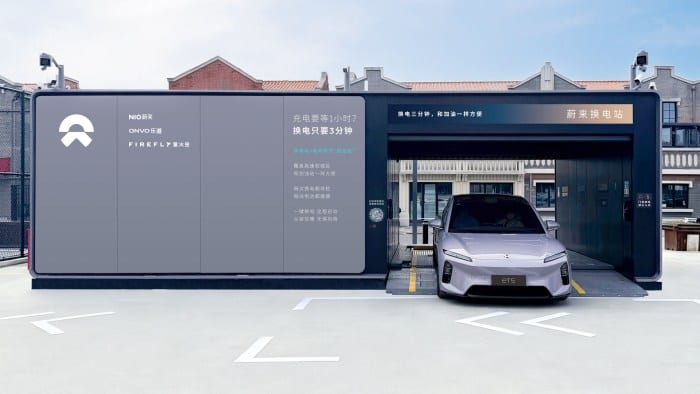
Nio has been highlighting SkyOS in investor communications and product launches as the structural foundation underpinning rapid feature deployment across its three brands — the namesake Nio brand, mass-market Onvo, and compact Firefly.
Background
Before Nio, Qu spent two years as engineering manager for the machine-learning runtime team at Waymo, where his team contributed to the launch of Waymo’s next-generation autonomous-driving stack on the Jaguar I-PACE EV and the company’s fifth-generation compute platform.
Qu’s career began at Baidu USA, where he spent more than six years across multiple roles, including director and head of CarOS as chief engineer, building automotive-grade software infrastructure for autonomous driving.
He holds a B.S. and Ph.D. in Computer Software and Computer Architecture from Beijing University.
Nio is scheduled to report first-quarter 2026 results in late May.
Deutsche Bank raised earlier on Monday its price target on Nio’s Hong Kong-listed shares to HK$ 80 from HK$ 76, while increasing the 2026 sales estimates for the Shanghai-headquartered EV maker.