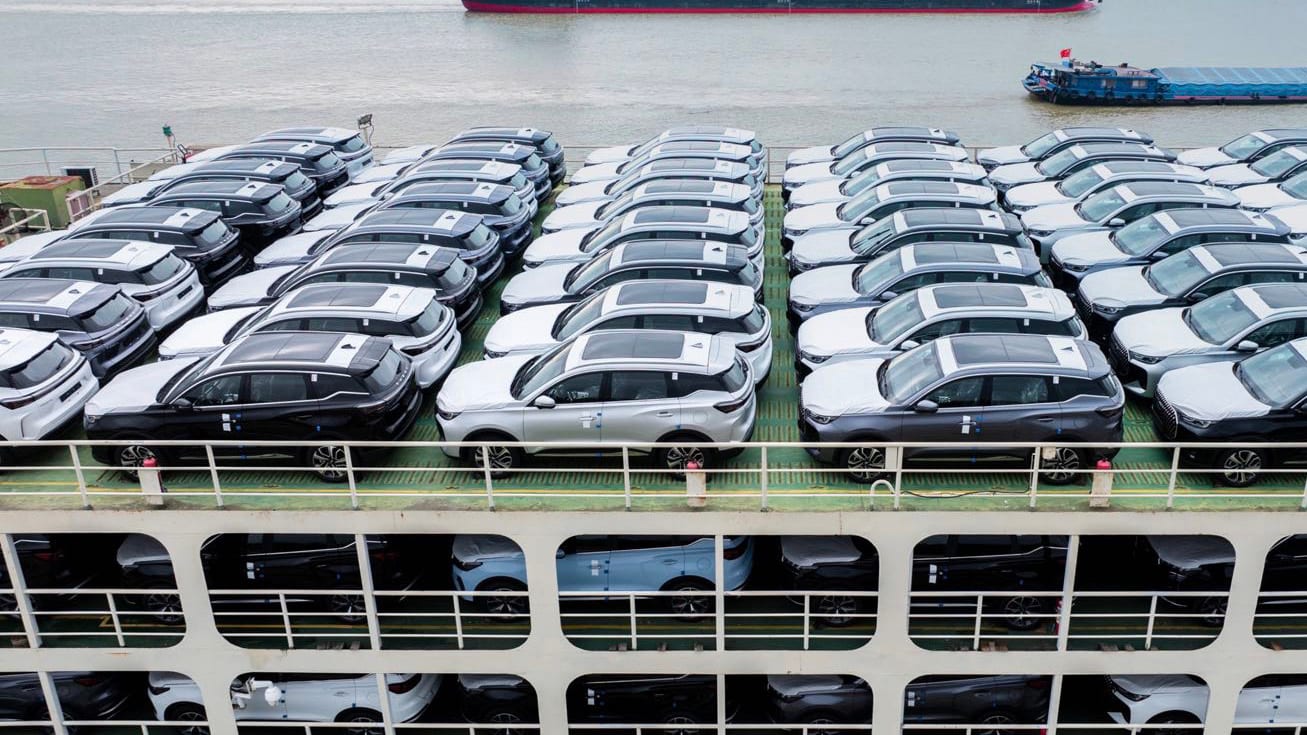

China’s largest automaker by export volume has issued its first official statement on a potential entry into the Canadian market, confirming it is “closely studying” the country and “evaluating partnerships with local stakeholders.”
Recruiters working on Chery‘s behalf were already approaching Canadian auto industry professionals on LinkedIn about roles tied to the Omoda and Jaecoo sub-brands, as reported by the Globe and Mail.
The Chinese carmaker is weighing becoming one of the first Chinese brands to sell passenger vehicles there alongside BYD and the Geely Holding Group‘s brand such as Lotus, Volvo and Polestar.
Chery‘s spokesperson Tianyi Zhang told Automotive News Canada that establishing a long-term presence and delivering competitive products are the company’s two key priorities.
“Our priority is to ensure that any potential introduction is approached thoughtfully,” Zhang said in an email published on Monday.
“We have been closely studying the Canadian market and are evaluating a range of potential pathways for future development, including partnerships with local stakeholders,” the spokesperson added.
From Silence to Strategy
Chery submitted trademark filings in Canada last year for six sub-brands including Exeed, iCar, Lepas, Luxeed, and Omoda-Jaecoo.
Zhang told the Automotive News that the filings were part of the company’s “broader intellectual property protection and future planning.”
On retail strategy, Zhang said the company has not made a final decision.
“We are currently evaluating different approaches that could best serve Canadian consumers,” the spokesperson told Automotive News Canada. “These may include collaboration with established local partners.”
Where Chery Stands in the Race
Chery’s approach contrasts with those of BYD and Geely, the other two Chinese automakers confirmed for Canadian market entry by year-end.
BYD has moved faster on regulatory groundwork.
The company registered its Shenzhen and Xi’an passenger vehicle factories with Transport Canada’s Appendix G preclearance registry — a step Chery has not yet completed.
BYD also has an existing Canadian corporate presence through its electric bus assembly plant in Newmarket, Ontario, which has operated since 2019.
However, BYD has rejected Ottawa’s demand for a joint venture with Canadian partners, with executive VP Stella Li telling Bloomberg that she would insist on owning and operating any Canadian facility outright.
Geely, which controls Volvo, Polestar, and Lotus, has the broadest existing Canadian footprint through its Swedish subsidiaries but has not previously confirmed its own nameplate for the market. Its sports car brand Lotus told the Globe and Mail last week that it expects to begin delivering its Chinese-made Eletre SUV in Canada in the third quarter — potentially making it the first Chinese-built vehicle to reach Canadian consumers under the new quota.
As of March 12, no import permits had been issued under the quota, which opened on March 1.
Tesla, Volvo, and Polestar — all of which manufacture in China and hold existing Canadian regulatory approvals — are widely viewed as the likeliest first movers.
Tesla has already repositioned its Model 3 supply chain for the Canadian market ahead of the quota.
Chery’s Global Playbook
Chery sold more than 2.8 million passenger cars in 2025, of which over 900,000 were new energy vehicles, and has set a 2026 target of 3.2 million units.
The company operates in more than 130 countries and describes itself as China’s top automaker by export volume.
Industry Minister Mélanie Joly met with Chery executives during Prime Minister Mark Carney’s state visit to Beijing in January, naming the company alongside BYD as among the automakers with which she held discussions.
Ottawa has said it expects Chinese automakers to commit to joint-venture manufacturing in Canada within three years of the trade deal.
Political Uncertainty
Any Chinese automaker entering Canada faces significant political risk.
The Conservative Party has pledged to scrap the Chinese EV quota entirely and ban Chinese-connected software from vehicles, aligning Canada’s tariffs with the United States instead.
The CVMA, which represents Ford, GM, and Stellantis in Canada, endorsed the Conservative approach on Sunday.
The final quota rules published in the Canada Gazette show no affordable EV requirement in the first year.
The C$35,000 import price threshold does not take effect until 2027, stepping up to 50% by 2030.